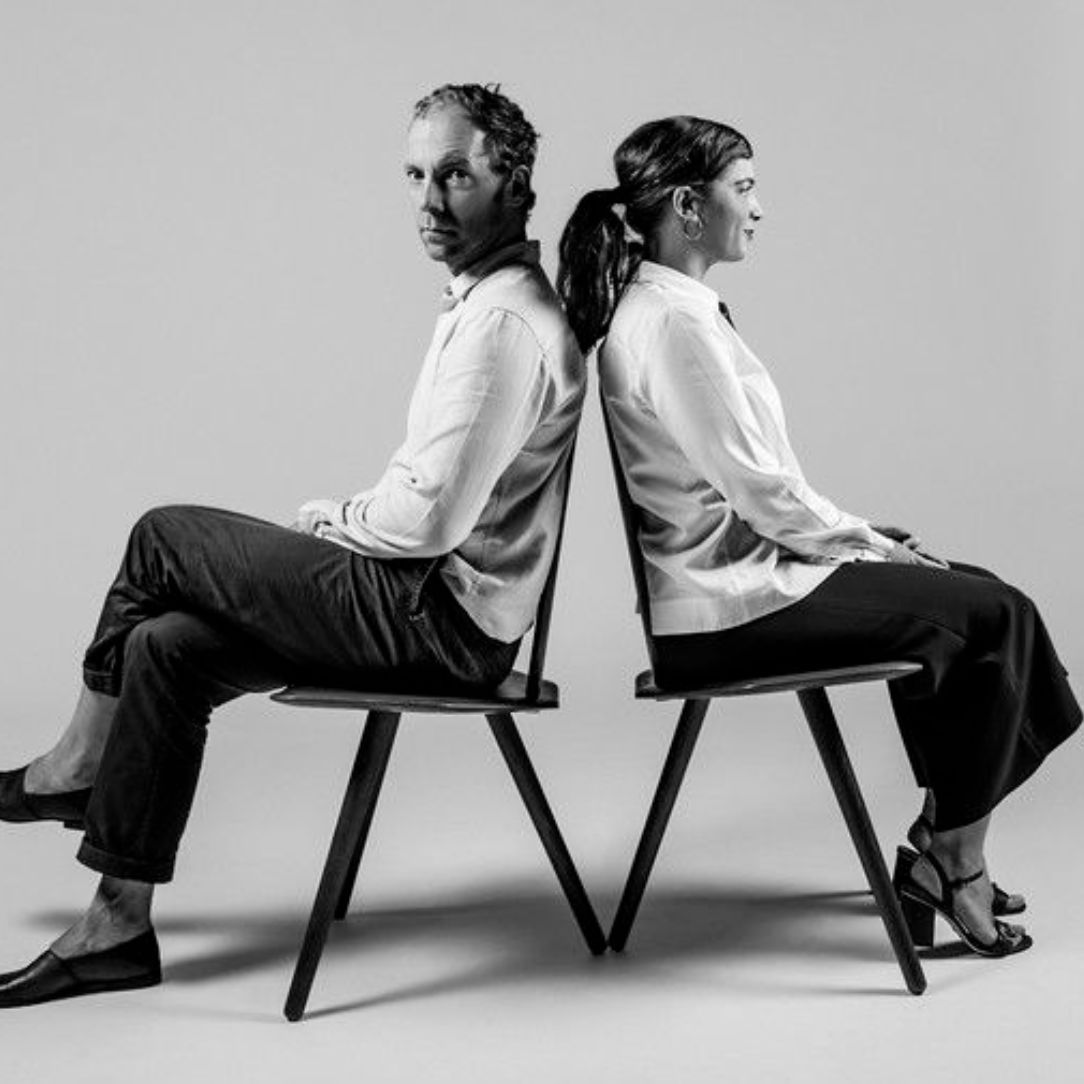
Andreas Kühne is an associate professor of the history of science at LMU, honorary professor at the Academy of Fine Arts Munich, and since 2022, the director of the Fine Arts department at the Bavarian Academy of Fine Arts. He curates exhibitions, edits early modern source texts, and writes as an art critic on on today’s visual arts scene.
We’ve worked on exhibition designs for several of his projects at the Bavarian Academy, and for this newsletter, we asked him to share his personal take on design.
H W
What role does design play for you?
A K
Fine art and applied art have always been complementary, with a relationship that goes back to the very beginnings of human creativity. Design, however, emerged as a distinct form of applied art only with the mass production of everyday objects and the development of industrial prototypes in the mid-19th century.
Adolf Loos (1870–1933) famously argued that “the evolution of culture is equivalent to the removal of ornament from the utilitarian object.” He sought to replace decorative excess with the “beauty of functionality,” making the material itself the carrier of aesthetic effect – a principle embraced, for example, by the Bauhaus.
Industrial design and advertising often draw on artistic innovations from studios and workshops, transforming and popularizing them with varying delays – sometimes years, today often just months or weeks. Even in urban billboards or online communication, traces of artists’ original visual languages can be identified. The time lag was particularly short during the Pop Art era, when artistic forms and colors almost immediately appeared in advertising, fashion, and design.
The distinction between “fine” and applied arts is still reflected in art and design education. Historically, this separation coincided with the emergence of artistic autonomy in early modernity. In Eastern Europe after World War II, the lack of such autonomy paved the way for a flourishing of applied arts, offering a quiet counterpoint to the ideologically driven “state art.”
Today, applied art and design are increasingly integrated into contemporary high culture in museums, such as Munich’s Pinakothek der Moderne. One ongoing question remains: should design objects be perfectly restored, or presented in their current state within the museum context?